
Bulldozer Master: Crush & Mine
Supercent, Inc.Arcade
4.4804.00 Reviews
- Version
- 11.2.0
- Installs
- 5.00M
- Age Rating
- Everyone
Screenshots
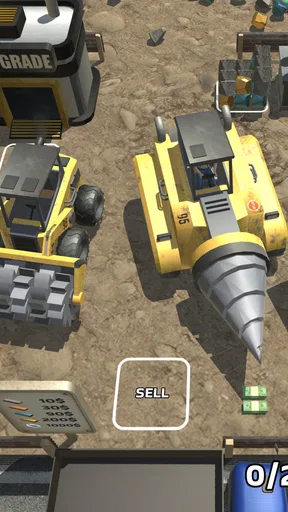
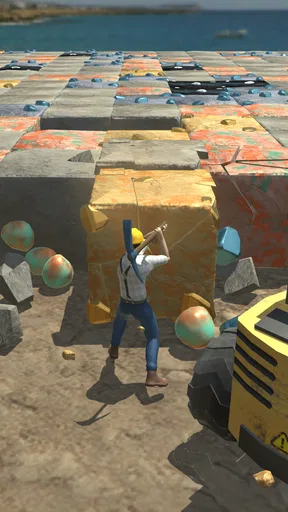
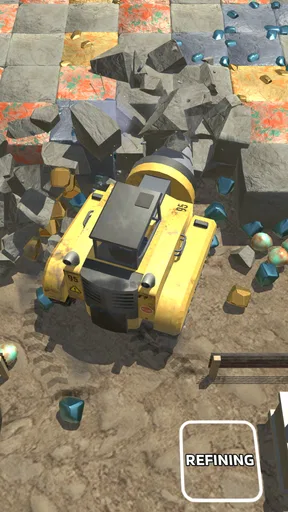
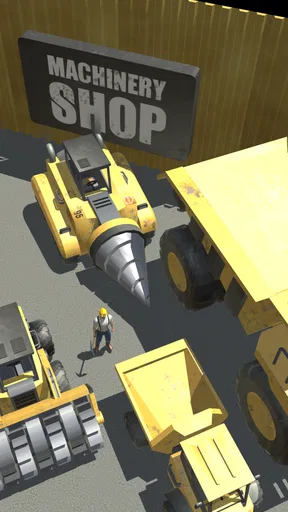
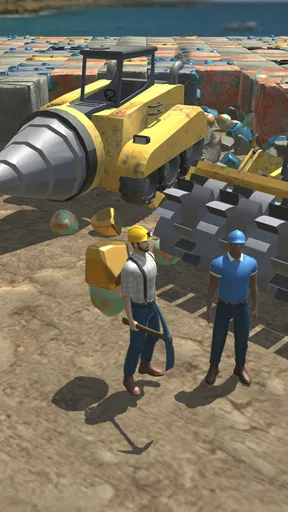
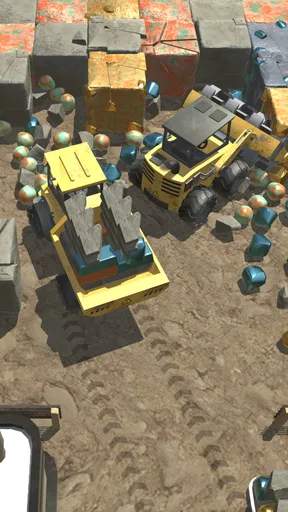
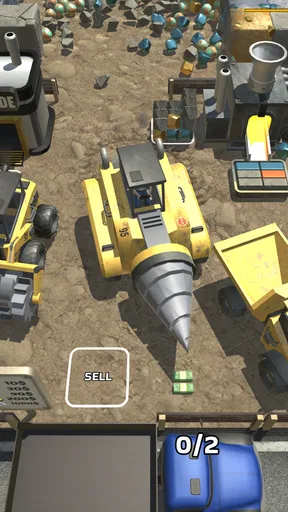
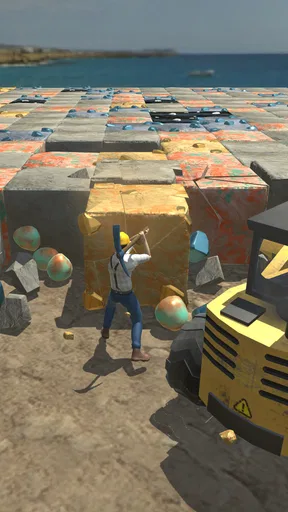
Our Review of Bulldozer Master: Crush & Mine
 Analysis by Appyee
I usually know within a few minutes whether an arcade game has a satisfying central action. With Bulldozer Master: Crush & Mine, that action is immediately clear: take control of a bulldozer, push through obstacles, and turn destruction into progress. It is a free game from Supercent, Inc. in the arcade category, aimed at players who enjoy simple controls and visible results more than complicated stories or deep strategy.
My first impression was that the game understands the appeal of heavy machinery. The pleasure is not in memorizing a large ruleset; it is in watching the environment give way as the bulldozer moves. Each push creates a small burst of feedback, and that makes the next target feel tempting. The store summary describes it as a destruction simulator built around demolition and mining, and that is a useful way to understand the experience: the game turns physical work into a short, repeatable mobile challenge.
The important question is not whether the controls are complicated, but whether the destruction feels rewarding enough to bring me back after a level ends. In my experience, this is best suited to quick breaks, casual play, and anyone who likes games where the objective is obvious from the moment the session starts.
Why the first push matters
The opening action is deliberately approachable. I do not need to learn a character’s abilities, follow a long tutorial, or understand a complicated economy before doing something useful. The bulldozer is the focus, and the environment provides the immediate problem: move forward, clear what is in the way, and continue toward the next piece of progress.
That simplicity is a strength on a phone. A game like this works well when I have only a short amount of attention available. I can start a session without preparing mentally, make progress through direct movement, and stop when I am ready. It is much less demanding than a traditional strategy game, a platformer that depends on precise timing, or a construction simulator that expects careful planning.
The trade-off is just as clear. Players who want a detailed vehicle simulator may find the experience too light. The bulldozer is presented as an instrument of satisfying action rather than as a realistic machine with a large set of controls. I would not choose it for authentic engineering detail or for a campaign built around complex objectives. I would choose it when the simple fantasy of clearing a path sounds more appealing than managing a long list of systems.
One useful habit is to treat the first pass through an area as a scouting run rather than rushing blindly. I pay attention to which obstacles slow the machine, where the route opens, and how much effort a particular section seems to require. Even in a straightforward arcade game, this makes the movement feel more intentional. Instead of holding a direction without thinking, I start looking for the most efficient route through the destruction.
Destruction feels best when the result is visible
The core satisfaction comes from a clear connection between input and outcome. I make the bulldozer move, an obstacle reacts, and the route becomes more open. That chain is easy to understand, which is why it can be relaxing. There is no need to interpret an abstract score before knowing whether I succeeded; the changed environment is part of the reward.
This also explains why the game is more appealing to some players than others. If you enjoy tactile-looking progress, the repeated motion can be calming. If you need a story, character development, or a demanding puzzle layer to stay interested, the same directness may feel thin after the novelty fades.
I found that the best way to enjoy the action is to focus on small milestones. Clearing one difficult section, opening a route, or finishing a compact objective gives the session a natural rhythm. Looking only at the final result makes the game seem simpler than it feels moment to moment. The individual pushes are modest, but they accumulate into a visible change.
The feedback rhythm keeps the loop moving
A strong arcade loop usually has four parts: an action, an immediate response, a reward, and a reason to begin again. This game’s action is driving and demolishing. The response is the movement of the bulldozer and the removal of whatever blocks progress. The reward is the feeling that the area has been handled and that I am closer to the next objective. Then the session resets or advances, giving me another reason to repeat the process.
That rhythm is the real product here. The individual tasks are not meant to be studied for a long time. They are meant to be completed, understood, and repeated without friction. When the feedback is clear, I can play almost automatically while still feeling that my input matters.
A practical tip is to avoid treating every obstacle as an invitation to push immediately. I get more enjoyment by checking the surrounding space first and deciding whether a direct approach or a small repositioning will make the next movement cleaner. This matters because the game’s appeal depends on maintaining momentum. Unnecessary shuffling interrupts the satisfying flow, while a deliberate approach makes each successful push feel more powerful.
The rhythm also makes the game suitable for different moods. When I want to relax, I can concentrate on the basic motion and let the repeated destruction carry the session. When I want a little more involvement, I can think about route choice and timing. It is not a deep strategy layer, but it gives the simple premise enough texture to avoid feeling completely passive.
Where the arcade design can feel limited
The same repetition that makes the game accessible can eventually expose its limits. Once I understand the basic interaction, the question becomes whether the next area offers enough variation in the way I approach the task. Players who need constant surprises may prefer a conventional action game with enemies, abilities, or more varied level objectives.
I also would not recommend it as a substitute for a full vehicle game. The attraction is the fantasy of demolition, not the detailed operation of industrial equipment. That distinction is important before installing it. This is a casual arcade interpretation of bulldozer work, and it succeeds when judged by immediate feedback rather than simulation accuracy.
The age rating is Everyone, which matches the uncomplicated presentation and broad accessibility. I would feel comfortable suggesting it to someone looking for a non-intimidating game, while still explaining that its appeal depends heavily on enjoying repetition. A universal age rating does not mean universal interest; younger players may like the direct destruction, while older players may prefer it as a brief time-filler rather than a main game.
Rewards give the demolition a purpose
Destruction alone can be amusing, but it needs a sense of payoff to support repeated sessions. In this game, progress is tied to the act of clearing and mining, so the reward feels connected to the work being done. I am not simply moving around an empty space; I am changing the environment and receiving a reason to continue.
That connection is one of the game’s better design choices. When the reward follows the action closely, the loop feels understandable. I know what I did to earn progress, and I can repeat that behavior when I start again. This is more satisfying than a reward that appears without any visible relationship to my decisions.
There is also a useful psychological difference between destruction and collection. In many casual games, I gather objects one by one. Here, the pleasure comes from removing resistance. The space in front of the bulldozer becomes easier to cross, and that change gives the reward a physical quality. For me, that makes the experience feel more active than a simple tapping game.
Still, I would keep expectations realistic. The reward structure supports the loop, but it does not turn the game into a long-form progression adventure. If I wanted a large upgrade tree, an elaborate narrative, or a competitive ranking system as my main reason to play, I would look elsewhere. This game is strongest when the reward is immediate and modest: complete something, see the result, and decide whether one more attempt sounds good.
How I would use it in an ordinary day
Imagine waiting for a friend outside a café with only a few minutes to spare. I could open the game, begin a demolition run, clear a section, and stop without needing to remember a complicated storyline. That is the kind of everyday scenario where it makes sense. It fills a short gap with an action that is easy to resume and easy to understand.
It can also work as a low-pressure break after a demanding task. I would not use it when I want a serious challenge or a long narrative session. I would use it when I want a visible result without having to invest much mental energy. The bulldozer fantasy gives the break a little personality, so it feels more distinctive than endlessly scrolling through a feed.
My advice is to decide in advance whether you want a short session or a longer run. The loop naturally encourages “one more” because each completed task points toward the next. Setting a stopping point after a particular objective helps prevent the repetition from becoming aimless. This is a small but useful way to keep the game relaxing instead of letting it turn into background tapping.
Free access, purchases, and practical expectations
The game is free to download, which makes it easy to test without committing money first. It includes optional in-app purchases ranging from $0.49 to $99.99 per item. That wide range is worth keeping in mind before playing for a long period. I would approach the purchase system cautiously, especially if the game is being used by a child, and check the device’s purchase controls rather than assuming every session will remain entirely cost-free.
For me, the sensible approach is to judge the basic demolition loop before considering any optional spending. If moving the bulldozer and clearing obstacles is already enjoyable, the free entry point has done its job. If the central action does not hold my attention, purchases are unlikely to solve that problem. Spending should support a game I already like, not be used to discover whether I like it.
The game is compatible with Android devices running version 6.0 or later, and the current version is 10.0.0. Those details make it accessible to people using older supported Android phones, although the feel of any action game can still depend on the device’s screen response and general performance. I would install it on the phone I actually plan to use and judge the controls there, rather than assuming that every device will feel identical.
Supercent, Inc. released the game on Apr 6, 2025. Its listing shows an average rating of 4.4 from around 10K ratings, with over 100K installs. I read those figures as a sign that the concept has found an audience, not as a guarantee that it will suit every player. The rating supports the idea that the straightforward loop works for many people, while the relatively focused premise still means personal taste matters a lot.
Who should play it, and who should skip it
I would recommend it to players who like casual arcade games with a strong physical theme. It is a good fit if you enjoy watching obstacles disappear, prefer objectives that can be understood quickly, and want a game that can occupy a short break without demanding a long tutorial. It is also a reasonable choice for families looking for an Everyone-rated experience built around simple demolition rather than combat or complicated dialogue.
I would be more hesitant to recommend it to someone who wants realism. A real bulldozer involves careful control, terrain management, and machinery knowledge; this game uses the bulldozer as an accessible arcade tool. That is not a flaw by itself, but it is a crucial expectation to set. The closer your ideal is to a construction simulator, the more likely a specialized alternative will suit you better.
I would also suggest skipping it if repetition quickly bothers you. The reason to start another session is mainly the promise of another compact round of action and progress, not a radically different genre experience. Players who need changing characters, elaborate missions, or a constantly expanding story may get more value from a platformer, a physics puzzler, or a deeper management game.
Compared with a typical idle game, this feels more hands-on because my movement is tied directly to the bulldozer’s work. Compared with a traditional arcade action game, it is calmer and less dependent on reflexes or combat. Compared with a mining game, its strongest identity comes from the physical act of clearing space rather than from resource planning. Those comparisons explain its niche: it sits between a relaxing simulator fantasy and a light destruction-focused arcade game.
The reset is the reason to try again
Every short arcade session needs a clean point at which progress feels complete and another attempt becomes attractive. Here, the reset works because the previous run gives me a small sense of accomplishment without exhausting the idea. I finish a section, see what has changed, and then face the choice of putting the phone down or starting another round.
That choice is important. A good reset should not feel like losing all meaning; it should feel like a fresh opportunity to repeat a satisfying action. The game benefits from this because its central pleasure is easy to understand and easy to re-enter. I do not need to rebuild a complicated plan before playing again.
My more advanced tip is to use the reset to test a different approach rather than merely repeating the same movement. If I rushed through the first run, I can try a cleaner route next time. If I focused only on the nearest obstacle, I can pay more attention to the broader path. This gives the loop a small personal challenge even when the game itself remains straightforward.
There is a limit, though. A reset can only carry a game so far if the underlying tasks remain too similar. That is why I see this as a companion game rather than something I would necessarily play for hours every day. Its strongest sessions are short enough that the destruction remains pleasant. Extended play may make the repeated structure more noticeable, particularly for players who prefer constant novelty.
My verdict on the complete loop
Bulldozer Master: Crush & Mine succeeds by keeping its promise simple: move a bulldozer, demolish what blocks the route, receive progress, and decide whether the next session sounds satisfying. The action is immediate, the feedback is easy to read, and the reward is connected to the visible change in the environment. That makes it a natural fit for casual play and quick breaks.
I especially like the way the game turns an ordinary movement into a small physical fantasy. The bulldozer gives the arcade loop a clear identity, while the mining and destruction focus makes progress feel tangible. My practical recommendation is to play with an eye toward route choice, use short sessions to preserve the novelty, and evaluate the basic loop before considering optional purchases.
It is not the right choice for realistic machinery operation, deep strategy, or a story-driven adventure. It is also not designed to hide its repetition behind a complicated structure. But if you want a free, Everyone-rated arcade game that lets you make visible progress through direct demolition, this is an easy one to try. I would recommend it to a friend who enjoys simple action with a satisfying reset, while warning them that its long-term appeal depends on how much they enjoy doing one more push.
Privacy and Permissions
See what permissions an app requests and how it handles your data.
- Wi-Fi connection information
- view Wi-Fi connections
- Other
- view network connections, full network access, control vibration, prevent device from sleeping, Google Play license check
Verdict
Strengths of Bulldozer Master: Crush & Mine
- Simple controls make it easy to start playing immediately.
- Satisfying destruction effects make clearing obstacles feel rewarding.
- Short levels fit well into quick gaming sessions.
- Progression encourages players to keep upgrading their machine.
- Bright visuals and clear objectives are easy to follow.
Limitations of Bulldozer Master: Crush & Mine
- Gameplay can become repetitive after several similar digging stages.
- Some upgrades may require considerable grinding to unlock.
- The bulldozer’s movement can feel imprecise in tight areas.
- Ads may interrupt the experience, especially between levels.
- Limited strategic depth may disappoint players seeking a complex simulator.
Other Releases by Supercent, Inc.
View All
Snake Clash!
Arcade4.5

Pizza Ready!
Simulation4.4

Prison Life: Idle Game
Role Playing4.0

Dessert Factory Idle
Arcade4.7
Similar Picks in This Category
View All
Subway Surfers
SYBO Games4.6

Stickman Party 234 MiniGames
PlayMax Game Studio4.6

Subway Princess Runner
Ivy4.4

Temple Run
Imangi Studios4.2

Zombie Tsunami
Mobigame SAS4.6

Stack Ball - Crash Platforms
CASUAL AZUR GAMES4.5
Frequently Asked Questions
What is Bulldozer Master: Crush & Mine?
Bulldozer Master: Crush & Mine is a casual construction and mining game centered on operating a powerful bulldozer. You drive through different areas, crush obstacles, clear terrain, and collect valuable resources. As you progress, the game lets you improve your vehicle and working efficiency, creating a simple gameplay loop that is easy to understand and suitable for short play sessions.
How do you play Bulldozer Master: Crush & Mine?
The main objective is to control the bulldozer across each stage while breaking objects, moving through blocked paths, and gathering materials. Controls are designed to be straightforward, so new players can usually begin without a long tutorial. Completing tasks and collecting resources helps unlock progress, while better upgrades make it easier to handle tougher terrain and earn rewards more efficiently.
Does Bulldozer Master: Crush & Mine require an internet connection?
The basic gameplay appears designed for quick, accessible sessions and may work without a constant internet connection, depending on the feature being used and the version installed. However, online access can still be required for advertisements, cloud-related functions, updates, special events, or in-app purchases. It is best to launch the game once while connected before relying on it for offline play.
Are there advertisements or in-app purchases in Bulldozer Master: Crush & Mine?
Like many free-to-play mobile games, Bulldozer Master: Crush & Mine may include advertisements and optional in-app purchases. Ads can sometimes provide extra rewards or speed up progress, while purchases may offer resources, upgrades, or other conveniences. You can play without spending money, but players who want faster progression should review the store and payment settings carefully before downloading.
Is Bulldozer Master: Crush & Mine suitable for children and casual players?
The game is generally approachable for casual players because its concept is simple, the controls are easy to learn, and the main activities focus on driving, crushing, collecting, and upgrading. Younger players may enjoy the straightforward construction theme, although parents should check the age rating, advertising content, and purchase options on the relevant app store before allowing unrestricted access.
Play our best games!


